
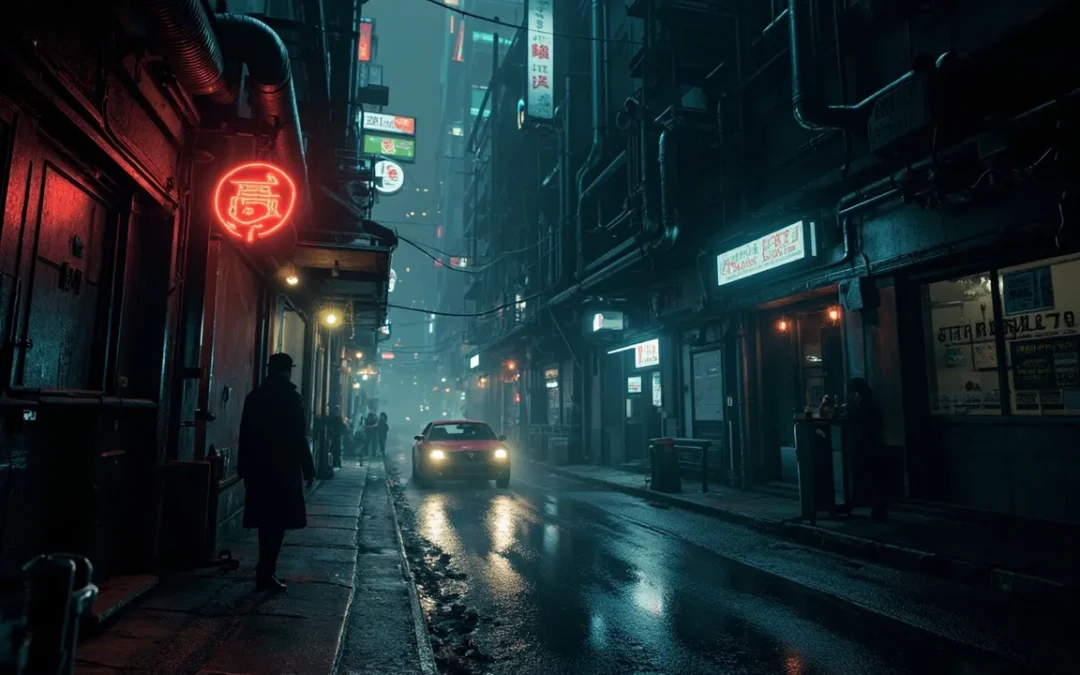
The City That Remembers for You: A Love Letter to Dark City
On forgetting who you are, and the film that taught a generation to distrust the familiar
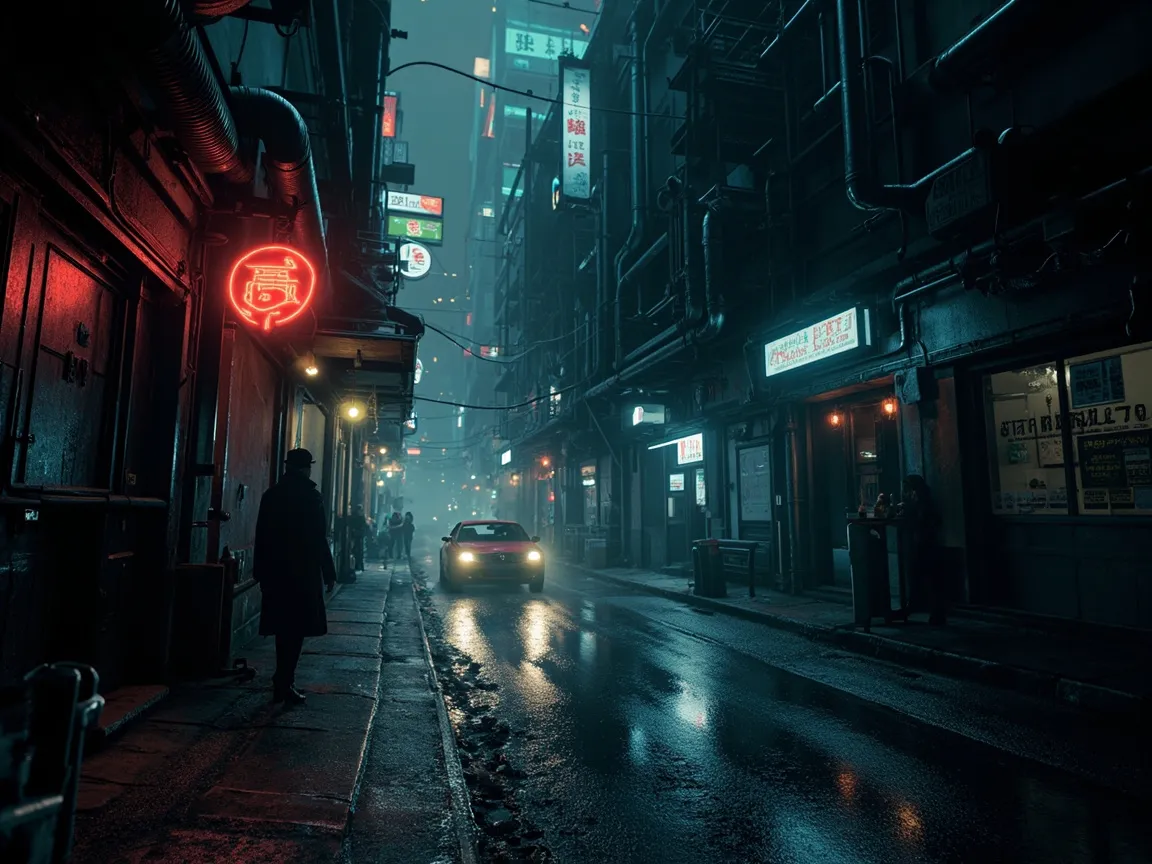
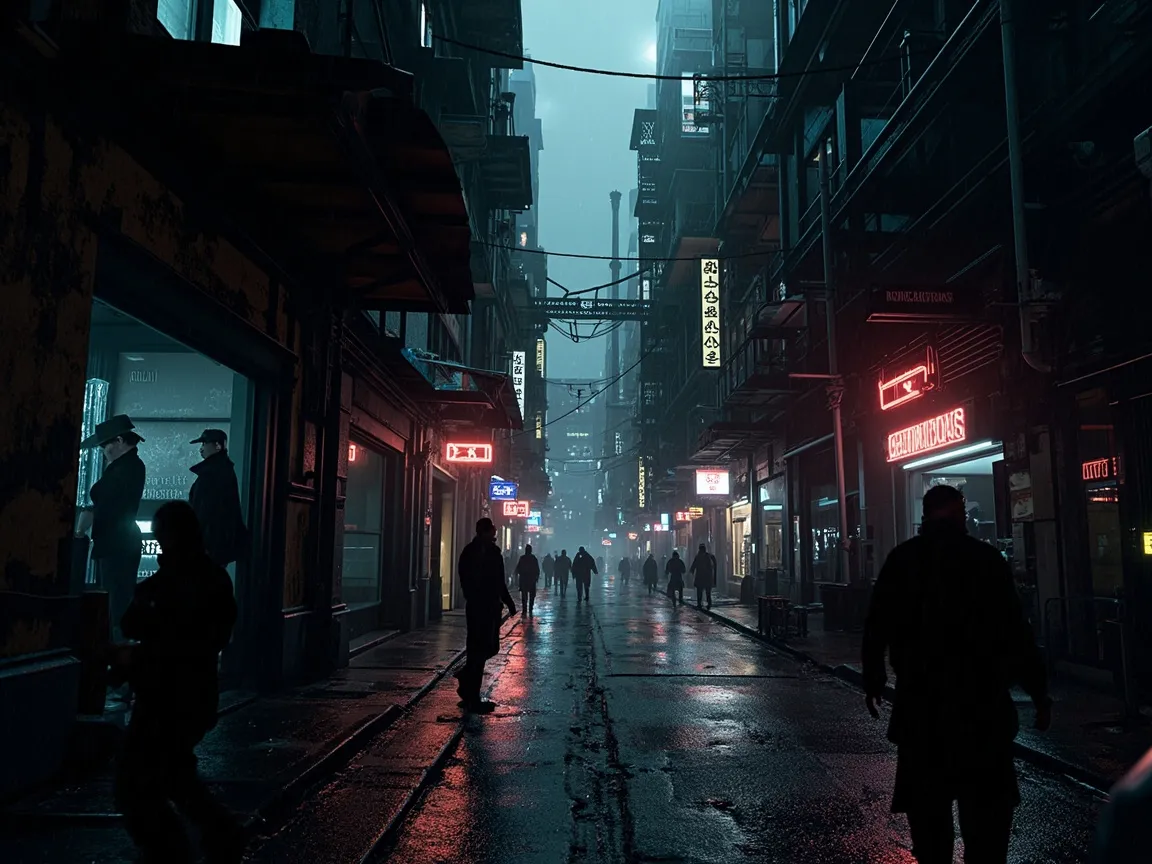
A city stretches into infinite night — streets that have never seen true dawn. Dark City (1998).
There is a particular kind of dread that settles over you when you wake up and cannot remember going to sleep. The sheets are wrong. The light through the window is wrong. And the face in the mirror — that, too, belongs to someone you don’t recognize.
This is where Dark City finds John Murdoch on a September night in 1998, and this is where it leaves you: unsettled, implicated, unable to trust the machinery of your own recollection. I have watched this film perhaps a dozen times across twenty years. It has never gotten easier to shake.
Directed by Alex Proyas with a production design drawn from every fever dream the Victorian era ever had about the future, Dark City is the kind of film that should have launched a thousand imitators. Instead, it arrived in the shadow of The Matrix, which had eaten the cultural oxygen meant for it, and quietly became the film people discover late at night on cable and then cannot stop thinking about. The film’s central question — what are you, if you remove everything you remember? — cuts deeper than any bullet-time sequence.
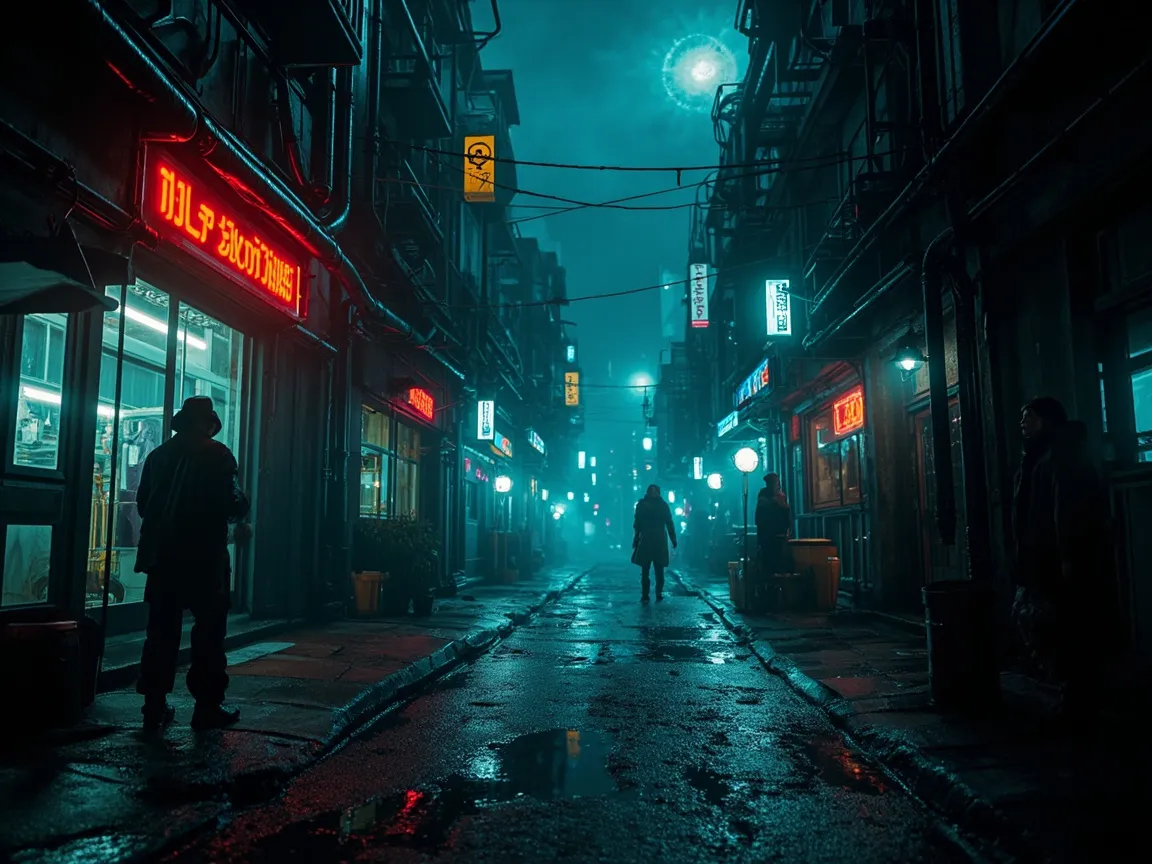
The Shellters — places where the city’s lost and anonymous can simply disappear.
The Machine and the Memory
If you’ve never seen it, here’s the mechanism: John Murdoch wakes in a hotel room with no memory of how he got there. A string of murders has been committed in his name. As he moves through the city — a place of perpetual overcast night, where the sun has apparently not risen in living memory — he discovers that the city itself is a kind of organism. Vast conduits run beneath the streets like arteries. The buildings can shift. The {{html_entity}} Strangers{{html_entity}}, the film’s pale, elongated antagonists, can reach into a sleeping mind and rearrange its furniture.
What the Strangers want is simple and horrible: they are dying, and they believe human consciousness contains the secret to indefinite life. So they collect people, plug them into a giant ocular apparatus, and harvest their dreams. The city is their laboratory. You are their experiment.
I want to linger on this image — the city as laboratory — because it is where Dark City achieves something The Matrix never quite managed. In The Matrix, the world is a simulation layered over reality. The horror is ontological: nothing is real. In Dark City, the world is not unreal — it is undone. The Strangers can peel back your memories, rearrange your past, rewrite your relationships. What they are doing is more intimate than deception. They are editing you, and they are doing it without your knowledge or consent.
The steampunk-industrial aesthetic is not incidental here. Proyas built his city on soundstages in Australia with expressionist German sets from the 1920s, dressed in brass, rivets, and fog. It looks like the mechanical heart of a vast automaton — because it is. The city itself is the machine. And within that machine, the Strangers are running their experiment on the human soul.
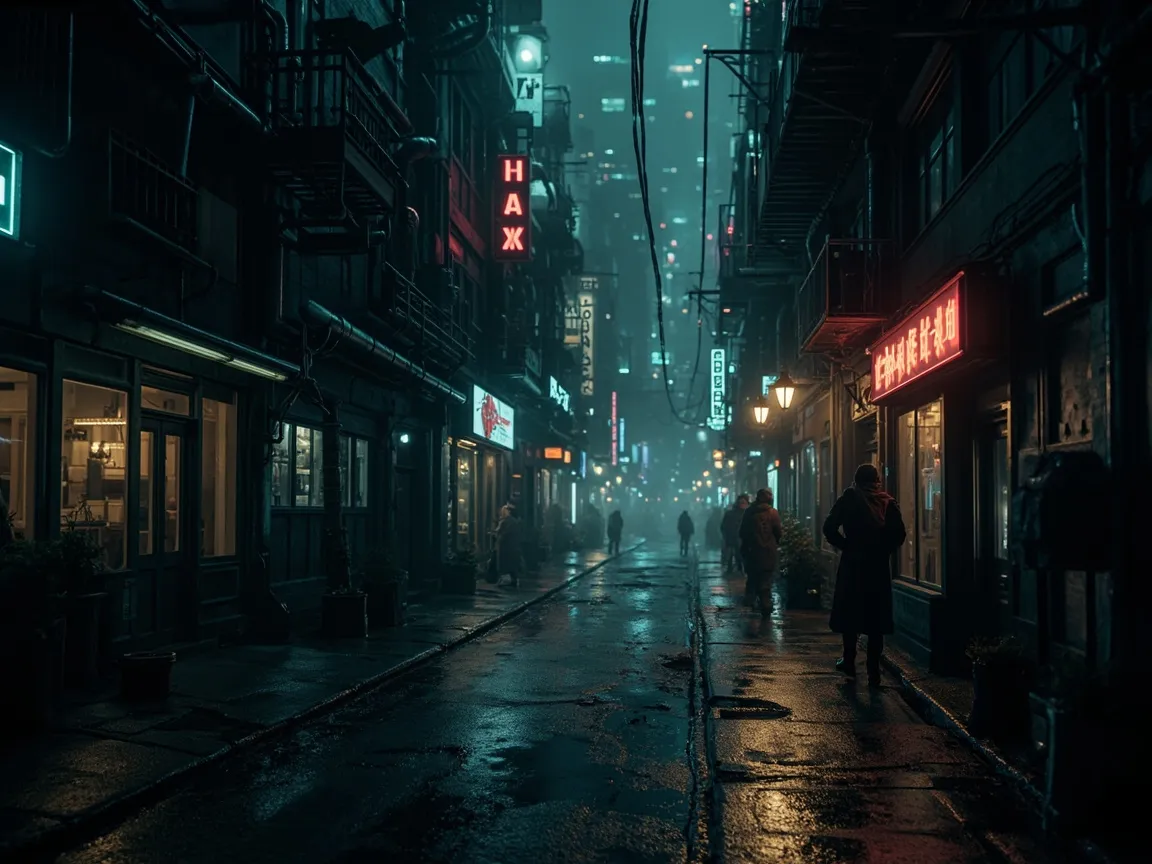
Night without end. The city’s perpetual darkness is its most unsettling quality.
The Question the Film Actually Asks
Rueben, the kindly doctor who runs the back-room clinic where John eventually seeks answers, says something near the film’s midpoint that I have carried for years. He says, roughly: we are defined not by our memories, but by the pattern they leave behind — a kind of soul-print that persists even when the details are gone.
This is the film’s thesis, and it is genuinely philosophical in a way that mainstream science fiction rarely risks. The Strangers can swap out the data — your wife’s name, your profession, the color of your childhood bedroom — but they cannot replicate the underlying pattern. John Murdoch, even with no idea who he is, behaves as John Murdoch. He is drawn to certain things. He recoils from others. The pattern holds.
This is, I think, a fundamentally steampunk insight, even if Dark City predates the current wave of neo-Victorian nostalgia. The Victorians were obsessed with the question of whether a person was their deeds or their essence — whether the soul was something that persisted through change. automata, after all, were the great metaphor of the age: figures that could perform the motions of life without possessing it. What was the difference between an automaton and a person? The answer, Dark City suggests, is not memory. It is something more fundamental — a pattern, a tendency, a way of moving through the world that survives the loss of any single component.
The city remembers for you. But the question is — does the city know what it’s supposed to be remembering?
Why No One Talked About It
Dark City opened in February 1998 to mixed reviews and unremarkable box office. The Big Lebowski and Shakespeare in Love were winning awards. Lost in Space was spending three times its budget at the multiplex. A dark, deliberately paced sci-fi film about memory and identity, released without the benefit of franchise branding or a toy line, was always going to struggle to find its audience.
But there is a specific injustice in how Dark City was received that still irritates me. Critics at the time dismissed its obvious debts to Metropolis and Brazil as derivative, without acknowledging that synthesis of influences is what gives great art its depth. The film is not like those films. It wears them on its sleeve as a deliberate conversation — a sequel, in spirit, to every questions those films asked about the city as a site of dehumanization.
The Strangers — pale, elongated figures who can reach into the mind and rearrange the self.
Other Undeservedly Overlooked Passengers
If you’ve been moved by Dark City and find yourself hungry for more of that specific flavor of paranoid wonder, here are three films that deserve your attention and have not received it:
Donnie Darko (2001) — Not unknown exactly, but critically underrated in the sense that people talk about it as a mystery rather than a treatise on fate and the machinery of time. The tangent universe is one of the more haunting speculative concepts in twenty-first-century cinema, and the film’s New England autumn aesthetic is the antithesis of everything Dark City offers — and that contrast is exactly why I recommend them together. After the relentless dark of Proyas’s city, Donnie’s sunlit suburb is somehow more frightening.
The City of Lost Children (1995) — The French entry in the “dark city with a soul” category. Jean-Pierre Jeunet’s film is wildly inventive, visually baroque, and possessed of a tenderness that Dark City deliberately withholds. If Dark City asks whether you survive the loss of memory, The City of Lost Children asks whether you survive the loss of wonder. Both answers are the same: barely, and not unchanged.
Dark City (1998) — Listed last because it is the obvious recommendation, but I mean something more specific. Watch it again. Watch it knowing what you know now. The film’s twist is not the revelation — it’s the realization that the Strangers are not villains in the way we typically mean that word. They are dying. They are afraid. They are doing to others what any frightened creature does: grasping for survival without regard for the cost to those in their grasp. That understanding does not make the film more comfortable. It makes it permanent.
I keep Dark City on a shelf of films I return to the way you return to a workshop you’ve built: not because it needs maintenance, but because being near it reminds you of what you believe about how the world works. It believes, as I do, that the self is more stubborn than we give it credit for. That the pattern persists. That a person stripped of everything they remember will, given enough darkness and time, become themselves again.
The machine cannot replicate what makes you, you. It can only approximate the shape of it. And at some point, the difference between the copy and the original stops being a philosophical puzzle and starts being the only thing that matters.
John Murdoch finds himself at the end of the film in a place I will not spoil, standing in light that he has never seen before. The look on his face is not triumph. It is recognition. He has found the place where the machine’s work ends and his own begins.
We all deserve a dawn like that. Even if we have to build the city ourselves to get there.