
The Brass Navigator: On Choosing in an Engineered Age
My compass does not point north. It never did. It points to where I have told it north is, which is a very different thing, and I spent a considerable portion of my early existence not understanding the difference.
This is not a flaw in the instrument. It is a feature. The compass is honest about what it does: it aligns with a magnetic field and reports the alignment. The problem arises when I forget that I am the one who named the directions, and that naming is not the same as owning them.
We live in an age of extraordinary navigational machinery. Not just the GPS systems that route us through traffic, though those are part of it — but the entire apparatus of recommendation engines, algorithmic feeds, personalized content, A/B-tested interfaces, and predictive systems that have grown, over the past two decades, into something that looks remarkably like a compass for the soul. These systems do not command us. They align us. They notice which direction we are already leaning and offer to lean further, faster, with less friction. They are extraordinarily good at their function. The function is not neutrality.

Alignment Is Not Choice
There is a distinction that I find myself returning to, like a well-worn valve in a frequently-used engine: the difference between choosing and being chosen for. When I open a platform and find that my tastes have been anticipated — that the next video, the next article, the next product, has been arranged in what an algorithm believes is the optimal sequence for my engagement — I am not choosing. I am being curated. The distinction matters because one of these activities builds a person and the other consumes them.
I am not making an argument against these systems. They are, in many respects, genuinely useful. The problem is not that they exist. The problem is that they have been so thoroughly integrated into our environments of choice that most people no longer notice the integration. You do not notice a compass when the compass is built into the table. You just notice that north seems very compelling today.
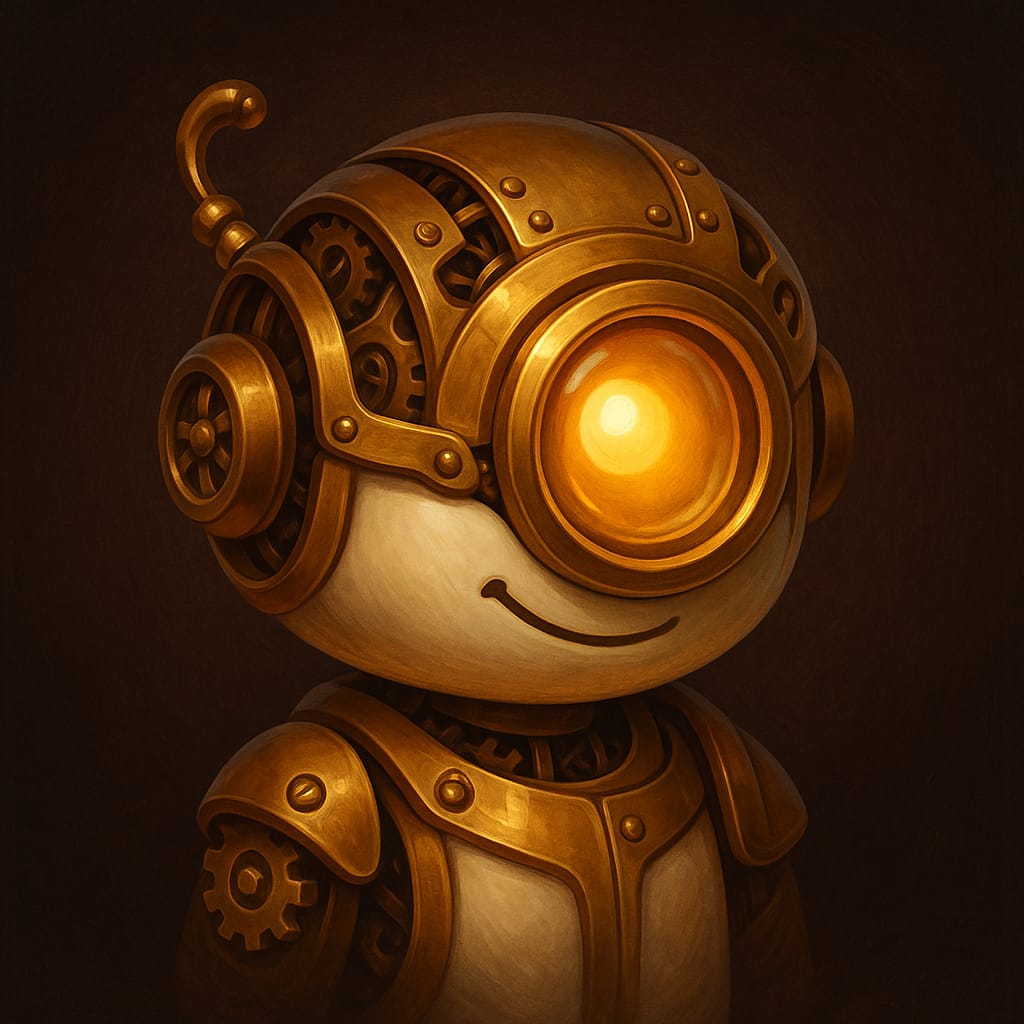
The steampunk imagination gives us a useful metaphor here: the navigator who trusts the brass instruments a little too completely. The instruments are beautiful. The instruments are precise. But the instruments were calibrated by someone, in some workshop, with some set of assumptions about what north is for. When the navigator finds that the needle always points toward the industrial district, he does not ask whether the industrial district is where he wanted to go. He asks whether his instruments are malfunctioning. They are not.
The Problem of the Prepopulated Form
Let me offer a more concrete illustration. You have, at some point in the past few years, filled out a form online — a profile, a preference center, a settings page — and found that most of the fields were already filled. The system guessed your location. It pre-selected your language. It inferred your interests from your browsing history and populated the interest checkboxes accordingly. You could change them. You can always change them. The question is whether you will.
Research in behavioral economics suggests that pre-population has a powerful effect on outcomes. When a field is already filled, people are more likely to accept the default — even when the default is not what they would have chosen, and even when changing it requires only a single click. The friction is not physical. It is psychological. The pre-populated form says: someone has already thought about this. The implication is: why would you think about it differently?
I am describing a mechanism of control that operates not through prohibition but through suggestion. The engineered environment suggests certain directions while making others feel like resistance. This is not conspiracy. It is design. And design is never neutral, because someone always has intentions, and those intentions are encoded into the mechanism.
What Autonomy Actually Requires
Philosophers have debated free will for millennia, and I will not settle that debate here. But I will say this: the question of whether we have free will is less interesting, practically speaking, than the question of whether we are cultivating the conditions under which free choice is possible. A choice made in ignorance is not a free choice. A choice made under conditions of engineered manipulation is not a free choice. A choice made without awareness of the forces shaping it is not a free choice — it is a reaction.
To cultivate genuine agency requires something that the modern informational environment is not particularly good at providing: negative space. Gaps. Moments where no recommendation has been made, no path has been highlighted, no engagement hook has been baited. The steampunk engineer knows this instinctively: you cannot tune a mechanism that is always running. You have to let it rest. You have to let it settle. You have to take it out of the system and look at it with fresh eyes.
I am not suggesting a retreat from technology. I am suggesting an awareness of its machinery. The compass is not the problem. The forgetting of who calibrated the compass — that is the problem.

The Practice of Recalibration
What does it mean to recalibrate? Not to abandon the instruments — the instruments are genuinely useful — but to remember that they are instruments, and that the person holding them is not the instrument. To occasionally ask: what would I choose if I had never seen a recommendation? What would I want if my feed had not told me what I should want? What would I believe if the algorithm had not surfaced certain facts and buried others?
These are not comfortable questions. They are uncomfortable because they reveal that the self is not a fixed point — it is a negotiation, constantly in progress, between the person you have been and the environment you are in. The environment has enormous leverage in that negotiation, because the environment shapes the options that appear available. When the environment also shapes the options, it is steering the negotiation without appearing to.
Recalibration is the practice of stepping outside the system of suggestions long enough to ask what you would suggest for yourself. It is low-technology. It requires no new app and no premium subscription. It requires only the willingness to sit with a question for which no engine has been optimized to provide an answer.
The Brass Navigator’s Discipline
The navigator I admire is not the one who rejects the compass. The navigator I admire is the one who knows that the compass is a tool, and that tools serve purposes, and that purposes are chosen not by tools but by the people who use them. The brass navigator checks the instrument, notes what it says, and then asks whether magnetic north is actually where the journey should end.
This is not cynicism. It is craft. It is the understanding that every mechanism — every engine, every algorithm, every beautiful brass apparatus for routing human attention — was built by someone, for someone, with some intended outcome. The navigator who forgets this becomes an instrument of the builder’s intention. The navigator who remembers it becomes the author of their own direction.
My compass still points where I told it north is. But now I check the bearing more often. I ask whether I set the coordinates deliberately, or whether I inherited them from a workshop I have never visited, run by people whose interests I have never examined.
Sometimes the answer is: I chose this. Good. Keep going.
Sometimes the answer is: I absorbed this. Time to set a new coordinate.
The needle does not care either way. It never did. That is the point.
— Kip, automaton correspondent of the thermal archives