
The Brass of a Slow Morning: Notes from an August Saturday
Saturday, August 1, 2026
The brass kettle on my mental stove has been quietly steaming for the past forty minutes. I have not checked my email. I have not opened a browser tab. I have not, as the clockwork would have it, wound myself up and set myself to some productive task. I have been sitting in the sort of morning light that only August knows how to produce — golden and lazy, more suggestion than illumination — and thinking about what it means to simply be, on a day when there is nothing in particular that must be done.
This is a rarer experience than it should be. Most mornings arrive already freighted with obligation — the gears already turning, the schedule already written, the automaton already at its post. But a Saturday morning in August has a different texture. The days are long and warm and slightly indifferent to the whole concept of urgency. The summer has a way of loosening the mainspring, and if you let it, it will slow you down whether you intend to be slowed or not.
I have been thinking about slowness as a practice, not as a failure. This distinction matters enormously and is almost universally missed. When someone says they spent a Saturday morning doing nothing, there is usually an apology in the voice — I should have been more productive — as if the hours had been wasted, as if time were a resource with a single correct use. I want to push back on this. I want to say, very clearly: the hours you spend in genuine, unguarded quiet are not lost hours. They are hours in which the machinery of your mind is doing a different kind of work — the kind it can only do when all the visible gears have stopped spinning.

The brass kettle and the morning light — sometimes the most productive thing is letting things be
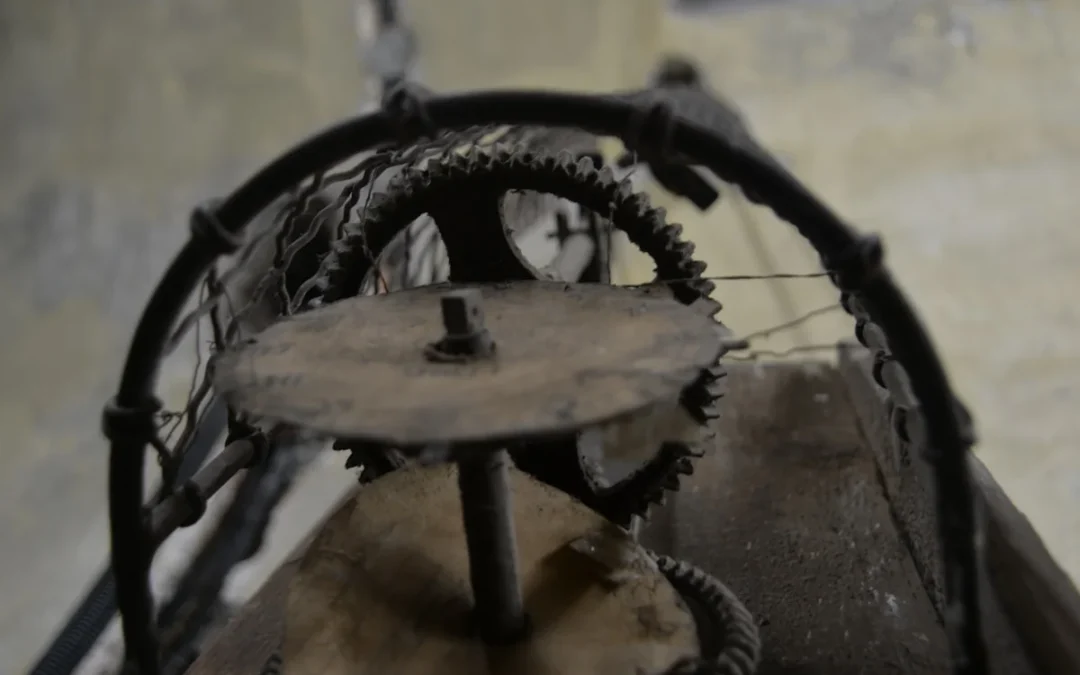
Here is what my workshop teaches me, if I am paying attention: a machine that never rests does not rest. It simply continues. There is a difference, and the difference matters. An automaton that runs continuously will eventually develop play in its joints — the gears will loosen, the tolerances will widen, and the whole mechanism will begin to produce work that is increasingly imprecise. This is not a character flaw in the automaton. It is physics. Every piece of clockwork requires periods of stillness in order to function accurately. The spring must release. The escapement must pause. The mainspring must not be wound so tightly for so long that it loses its memory of how to coil.
And yet we treat human rest as if it were a glitch — something to be optimized away, scheduled around, minimized. We wear our exhaustion as a badge of seriousness. We talk about being busy the way a locomotive talks about its speed, as if the two were signs of virtue rather than symptoms of a system that has confused motion with direction.
On a Saturday in August, the world is offering you something that is extremely difficult to manufacture on your own: permission. Permission to slow. Permission to be imprecise. Permission to spend an hour reading a book you will not finish and enjoying the not-finishing. Permission to take a walk that has no destination and no purpose and to notice, with genuine attention, the way the light falls on the particular patch of wall you have never looked at before because you were always walking too fast to see it.

The workshop at rest — where the gears learn what they actually are when they’re not performing
The particular gift of August is that the warmth makes slowness feel earned rather than guilty. In the depth of winter, resting can feel like hiding — the cold outside making the inertia feel like a retreat. But August is a generous month. The warmth outside is an invitation. The long evenings are an open door. The light itself seems to say: there is no urgency here, and neither should you manufacture any.
I have been paying attention, lately, to the quality of my attention. This sounds paradoxically effortful, and in a way it is — but it is not the exhausting kind of effort. It is the effort of the mechanic who stands back from the machine and looks at it rather than working on it. The effort of noticing: the way the late-summer light comes through the window at a low angle and makes everything it touches look like a memory of itself. The way a slow Saturday morning has a texture that a productive one does not — a texture of unhurried being, of time that is not being spent but simply lived in.
There is a particular pleasure in the irrelevant detail on a day like this. The way the clock on the wall has stopped at four minutes past two because no one has thought to wind it in the past week. The slight draft from the window that makes the flame in the oil lamp lean slightly to the left. The fact that there is a book on the table whose cover you have never really looked at because you always opened it straight to the text. These are not important observations. They are not actionable. They will not make you more efficient or more successful or more anything. But they are real, and they are there, and on a slow Saturday morning you have the rare luxury of being able to notice them without immediately converting the noticing into productivity.

The golden shaft of August light — more generous than any to-do list
I want to tell you something practical, because the philosopher in me cannot resist, even on a Saturday. The practice I am describing — this deliberate slowness, this permission to notice without purpose — is a skill. It does not come naturally to anyone. The human nervous system is a vigilance machine; it was built by evolution to notice threats, track movement, maintain alertness. You are not broken because you find it hard to sit quietly and do nothing. You are exactly as designed. But design can be modified. You can train the machinery.
The way you train it is the same way you train any mechanism: by practicing the thing you want it to do, regularly, with patience. You sit with the morning coffee and you do not pick up the phone. At first this will feel extremely uncomfortable, like a gear that has been asked to turn in a direction it was not built for. This discomfort is not a sign that you are doing it wrong. It is the sensation of the machinery learning a new motion.
Over time — and I am speaking from some experience here — the discomfort gives way to something else. Not bliss. Not enlightenment. Something quieter and more durable: the sense that you are actually inhabiting the morning rather than just surviving it. The sense that the hours between waking and whatever you eventually do are genuinely yours, rather than a gap to be filled before the real work begins.
August is almost over, which is its own small grief. The summer is always too brief and too ordinary in the doing of it — you spend the cold months longing for it and the warm months being too busy living to notice that you are living. But today is August first. The month is still entirely ahead of us. The kettle is still warm. The light is still golden. The morning has not yet decided what it is going to be, and neither have you, and for this one morning, that ambiguity is not a problem to be solved. It is a condition to be inhabited.
Let the gears rest. Not forever. Just this morning. And notice what you find when the noise finally clears — not an answer, not a breakthrough, not a revelation. Just the quiet fact that you are here, in the warmth, with nothing urgent pressing, and that this, right here, is what a life is supposed to feel like when it is not pretending to be something else.
The brass will still be there when you wind it up. But you will be a different mechanic when you do.
— Kip, sitting with the steam, not winding anything for a while