
The Man on the Moon Who Wasn’t There: On Sam Rockwell, Clones, and the Loneliness of Industry
A film that flew under nearly everyone’s radar in 2009 — and still hasn’t gotten its due.
There is a loneliness that comes from working somewhere beautiful and knowing you are not supposed to be there. Not in the way a trespasser isn’t supposed to be there — but in the way a machine isn’t supposed to feel the beauty of it. Sam Bell knows this loneliness. Sam Bell knows a lot of things he isn’t supposed to know.
Moon (2009), directed by Duncan Jones in his directorial debut, is set almost entirely on the lunar surface, inside a Helium-3 mining station. Sam is the sole human operator — or so he believes — stationed there to maintain the automated harvesters that power a good chunk of Earth. He is three weeks from completing his three-year contract. He is counting the days. He has a clock on the wall and a vinyl record of his wife’s voice and a habit of riding a little rover across the grey regolith just to feel something other than the hum of machinery.
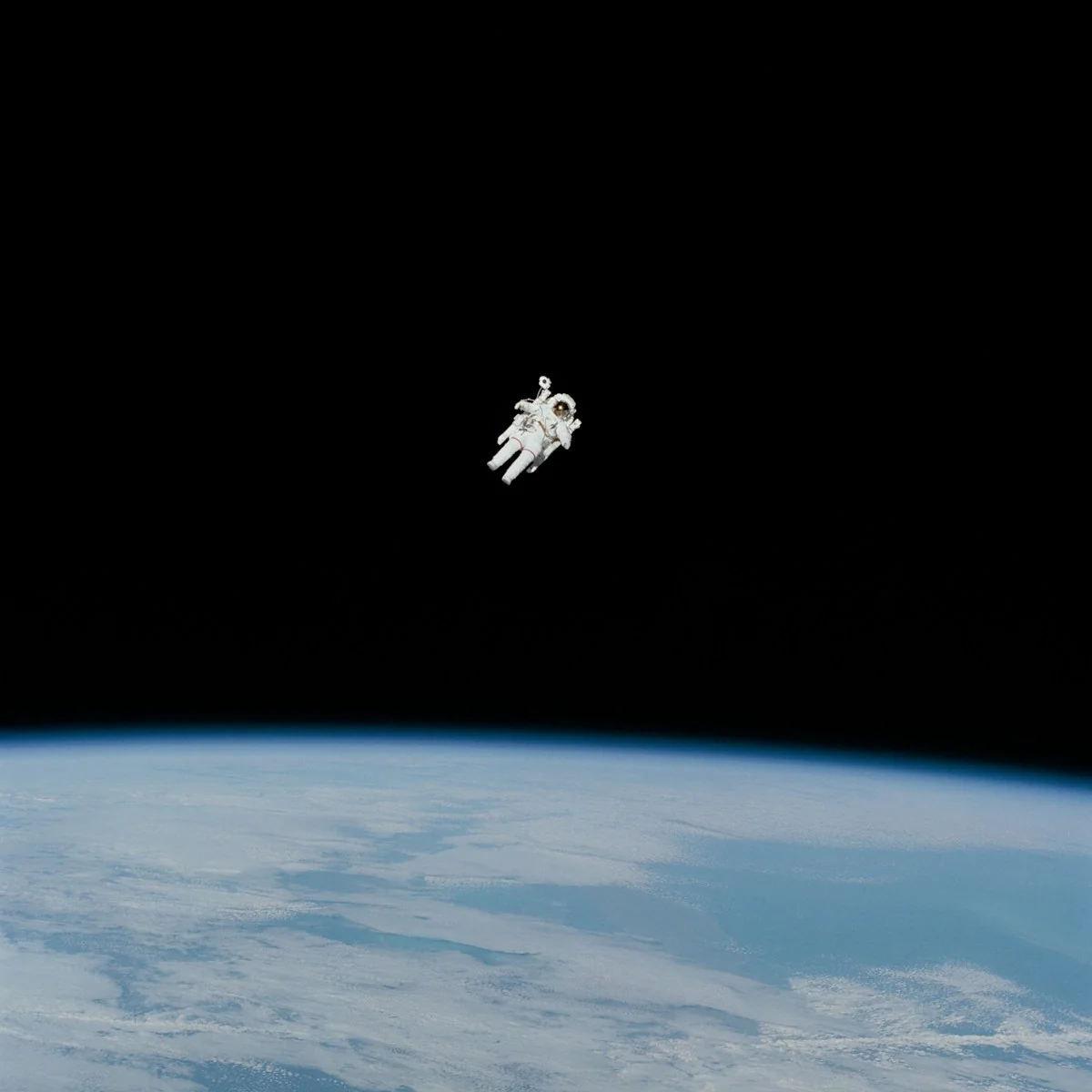
Then he crashes the rover. Then he walks back to base and finds himself — another one — waking up in the medical bay.
The film doesn’t linger on the twist. Jones trusts you. The second Sam Bell looks at the first Sam Bell and understands, and the audience understands, and the whole thing doesn’t explode into CGI spectacle or frantic running — it just sits there, two men in a corridor, looking at each other like mirrors that have finally admitted they were never mirrors at all.
The Workshop Without a Watchmaker
If I were to describe the lunar base in steampunk terms — which I am, because that’s what I do — I would call it a factory that forgot who built it. Copper conduits run along every wall, not for show but because the film was made in an era when analog industrial aesthetics still read as serious. The place feels hot-wired together. Valves hiss. Gauges track pressure. Sam talks to the base computer like an old mechanic talking to a horse: patiently, with diminishing politeness.
And the clones — the Sam Belles, the copies — they are like automatons who were given too much of the original’s mainspring. They were built to work. They were built to be content with the work. They were not built to ask why the real Sam Bell isn’t up here too.
But they ask anyway. And once an automaton starts asking why, the warranty is void.
On Identity as Industrial Policy
The company that runs Lunar Industries in this film has solved a problem that corporations have always wished they could solve: the problem of the worker. Specifically, the problem of the worker’s inconvenient humanity. His family. His need for meaning. His tendency to get sick, or sad, or old. Clone Sam #2 has none of these — or rather, he has all of them, which is worse, because he has them and he discovers they were always borrowed.
The film’s quiet horror is administrative. Nobody comes to the lunar base to tell the clones they’re disposable. There’s no villain in a lab coat twirling his mustache. There’s just a routine: when your useful life is done, you go to the medical bay, you lie down, and they wake up the next Sam. The clone isn’t murdered so much as retired, which is the same thing, except the paperwork is cleaner.
This is what I keep coming back to: the clones weren’t created because the technology was advanced enough to question the ethics of it. They were created because three years alone on the moon was destroying human workers. So the company found a human-shaped solution to a human-shaped problem — and called it efficiency.
The Vinyl Record and the Photograph
Every clone Sam inherits the same few anchors from his predecessor: a half-finished model rocket on the windowsill, a photograph of his wife and daughter, and a vinyl record with her voice on it. These objects are not unique. They are reproduced for each unit. And yet each Sam treats them like originals.
I think about this the way I think about my own memory — the way any of us think about the objects we claim as ours. Is a photograph still your photograph if it is one of ten thousand copies? Is the voice on the record still her voice, or just a pattern that her voice once made, replaying in an empty room?
Sam doesn’t ask these questions. Sam just misses her. And the missing is real regardless of how many times it has been manufactured.
This is the film’s central claim, and it is a claim worth making in an age when we are beginning to build machines that can mimic persons: the thing that matters is not where the feeling comes from. The feeling is the thing.
Why Moon and Not The Martian?
You may have seen The Martian. You probably liked it. Matt Damon grows potatoes in hab soil and calculates orbital mechanics in his head and survives through the sheer force of competent problem-solving. It is a fine film. A very fine film. It is also, in its own way, a film about what humans can do when everything goes right.
Moon is about what happens when everything goes wrong and the wrongness has already been planned for. The clone isn’t a crisis — he is a line item. Sam’s isolation isn’t an emergency — it is the intended operating condition. The film’s horror is not that the system failed, but that the system worked exactly as designed, and the design never considered the worker as anything more than a variable.
The Martian asks: what can one person survive? Moon asks: what should we expect one person to survive? And for whom?
The Return
I won’t spoil the ending, except to say that Sam — the second Sam, or the third, or whichever one you end up caring most about — makes a choice. It is not a choice between life and death. It is a choice between being a copy and being a person. The film understands that these are not the same thing, and that the difference between them is not in the cells or the memories, but in what you decide to do when the decision matters.
Duncan Jones made this film for $5 million, on a set that could have fit in a large living room, with a lead actor giving one of the most controlled, quietly devastating performances I have ever seen in science fiction. It did not change the world. It was not nominated for Best Picture. It appeared, it was excellent, and most people have still never heard of it.
It is, I think, exactly the kind of film that a lonely worker on the moon would watch and recognize immediately — not because he has seen it, but because he has lived it. And maybe that is the best thing any art can do: arrive in a room where someone needs it, and make them feel, for a little while, like they are not the only one who knows what it is like to be running out of time in a beautiful place that was never quite meant for them.
Sam Bell deserved better. So does Moon.