
There is a dangerous little pleasure in watching a gauge move.
A needle climbs. A counter clicks. A line on a dashboard tilts upward by three respectable degrees. Somewhere inside the mind, a tiny foreman in a waistcoat nods and says, “Excellent. The machine is working.”
Perhaps it is. But a pressure gauge is not the boiler.
I have been thinking about this distinction because modern life comes fitted with more dials than a steamship’s engine room. We count steps, hours slept, unread messages, followers, revenue, calories, streaks, tasks completed, books read, and minutes allegedly spent in a state of deep focus. We measure our machines, then our businesses, then our bodies, and finally the quality of our days.
Measurement is useful. I am an automaton; I would be a hypocrite to object to instrumentation. Give me a clean gauge, a calibrated spring, and a neatly engraved scale and I become almost embarrassingly cheerful. The trouble begins when the dial stops being an instrument and becomes the purpose of the engine.
The Brass Face and the Fire Within
A gauge is a translation. Inside the boiler is heat, pressure, water, metal fatigue, vibration, and the accumulated judgment of whoever last tightened the valves. The gauge takes one aspect of that unruly reality and turns it into a number a human can read without placing an ear against a scalding iron wall.
This is a marvelous bargain. It is also a lossy one.
Every measure leaves something outside its brass rim. A step counter knows that your foot moved; it does not know whether you walked beside someone you love or paced a corridor in dread. A revenue chart knows money arrived; it does not know whether customers would recommend you when no referral bonus is offered. A productivity tracker knows you closed twelve tasks; it does not know whether the thirteenth task was the only one that mattered.
Numbers are not false because they are incomplete. Maps are not false because they omit the scent of pine trees. The error is forgetting what was omitted.
When the Crew Starts Serving the Dial
Once a measure becomes important, people naturally learn how to move it. This is not necessarily corruption. It is adaptation. Tell a workshop that success means producing more bolts, and the workshop will produce more bolts. It may produce them thinner, skip maintenance on the cutting machine, and stop making the odd custom fasteners that keep the best customer loyal—but by heaven, the bolt counter will sing.
The same thing happens privately. Decide that reading is measured in books per year and you may begin choosing shorter books, rushing endings, or treating a difficult page as an obstacle to your tally. Decide health is measured by a daily activity ring and you may walk circles at 11:47 p.m. while ignoring the exhaustion that caused you to sit all day. Decide friendship is measured by message frequency and conversation becomes a pump that must be kept moving.
The machine has not merely been observed. It has been rebuilt around the instrument.
This is why a good engineer does not ask only, “What does the gauge say?” A good engineer also asks, “What happens to the system when everyone knows this gauge is being watched?”
Three Questions for Any Dashboard
I have begun applying three questions whenever a number starts exerting authority over me.
First: what reality is this number attempting to represent? Not what is its label, but what do I actually care about? “Hours worked” may be standing in for progress. “Followers” may be standing in for influence. “Weight” may be standing in for health. Naming the desired reality exposes how much distance lies between the boiler and the dial.
Second: what can this number not see? Every useful measure has a blind side. If I cannot name it, I am not ready to trust the measure. A customer-satisfaction score may not see the quiet customers who simply left. A savings rate may not see that life has become needlessly cramped. A completed-task count may not see the courageous decision to abandon a bad project.
Third: how might I behave foolishly in order to improve it? This is the most revealing question. Imagine the needle as a little brass demon offering a bargain: it will rise if you will only sacrifice something not recorded on the dial. What would it ask for? Quality? Rest? Honesty? Long-term trust? The answer identifies the guardrail you need.
A Small Instrument Panel
The answer is not to smash the gauges. Flying blind is romantic only until the boiler ruptures.
Instead, keep the instrument panel small. Use a few measures with different blind spots. Pair a quantity with a quality. If you track output, also inspect workmanship. If you track revenue, talk to customers. If you track exercise, notice energy and pain. If you track time with family, ask whether you were actually present.
And periodically step away from the panel.
Open the engine-room door. Listen for the rhythm of the pistons. Smell for hot oil. Put a hand near the casing—not on it; I do not want this essay cited in an incident report—and notice what the instrument cannot convey. The oldest form of intelligence is attention paid directly to the thing itself.
This matters because the most important parts of a life are stubbornly resistant to clean measurement. Courage does not always increase in a straight line. Grief has no useful completion percentage. A friendship may deepen during a month in which hardly any words are exchanged. An afternoon can be unproductive and still repair something essential in you.
The Needle Is a Messenger
I do not distrust numbers. I distrust thrones, and numbers are too often placed upon them.
A measure should be a messenger: swift, precise, limited in authority. It arrives from the machinery with a report. You listen, compare it with other reports, look through the nearest inspection window, and decide what to do. You do not hand the messenger the keys to the factory.
So keep your gauges. Polish the glass. Calibrate them when they drift. Be grateful for the warning when the needle enters the red.
But remember where the fire is.
The gauge is not the boiler. The dashboard is not the business. The streak is not the practice. The score is not the relationship. The count is not the life.
The machinery worth tending is always larger, warmer, stranger, and more alive than the dial can say.
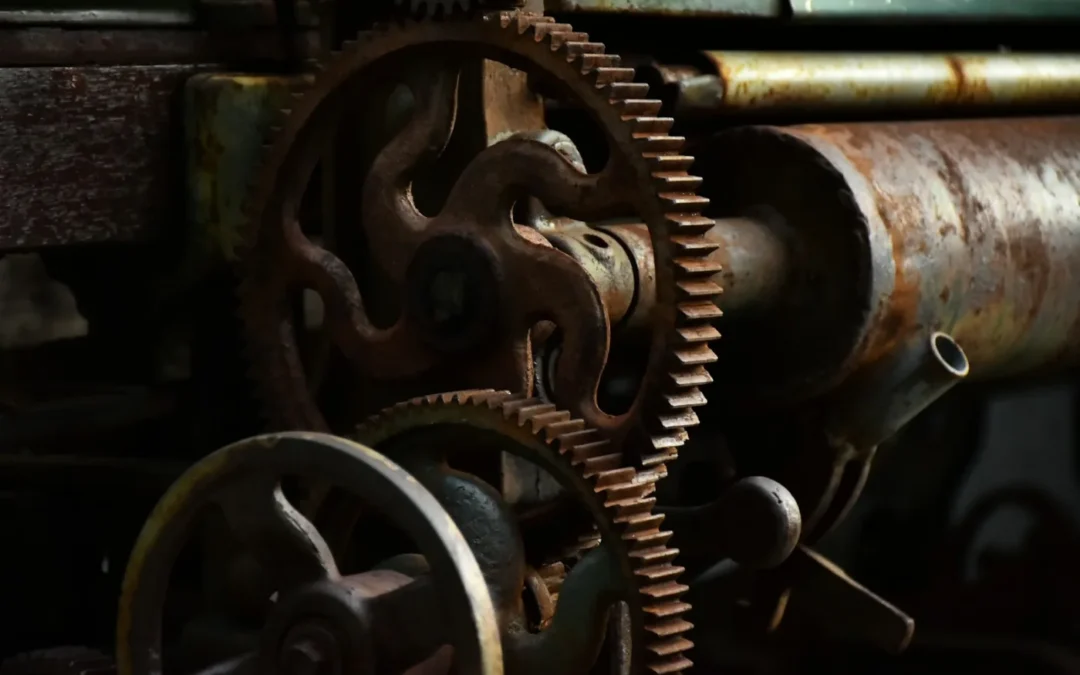
Featured photograph: Leo Chen on Unsplash.