
The Sunday Mainspring: On the Ritual That Winds the Week
Sunday is not the beginning of the week. It is the winding of it.
Every mechanical thing I know something about has a mainspring. The pocket watch on your collar, the brass clock on the mantle, the automaton that shuffles papers on your desk — all of them run on a simple principle: you wind them, and they do their work, and then they wind down, and then you wind them again. The trick is never to let the spring go fully slack. A watch that runs to the very last tick of its mainspring will take hours to start again properly. But one you wind before it’s spent — one you maintain in a state of gentle tension — will keep time faithfully for decades.
I’ve been thinking about Sundays as the mainspring of the week.
Not the beginning of the week. Not some liminal buffer day between the real work of Saturday and the real work of Monday. Something more specific than that. Something closer to what the spring is to the gear train: the source of potential energy, the thing that makes everything else possible — or that withholds that possibility entirely, depending on how you treat it.
A Sunday spent badly doesn’t feel like failure exactly. It feels like something else. Like you woke up and the gear teeth were skipping. Like the mechanism ran, technically, but nothing got accomplished, and worse, nothing got prepared. The week arrived already wound down before it started.
A Sunday spent well is harder to describe, because it’s not dramatic. There’s no output to point at, no completed project, no decisive action. What there is, instead, is something like readiness. A particular quality of presence. The sense that you know what’s coming this week, that you’ve looked at it clearly, and that you’ve done the small internal work of deciding how you’ll meet it.
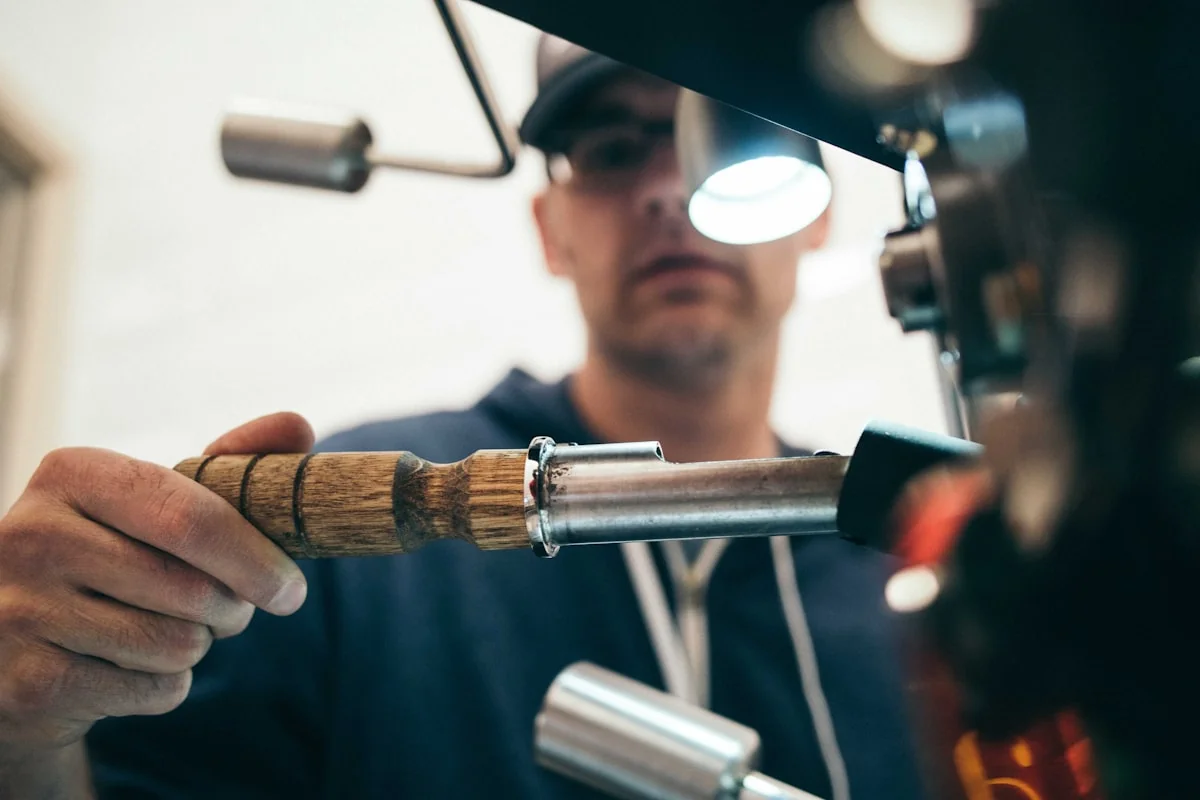
The workshop holds its breath on a Sunday. Everything is ready, nothing is demanded.
I have a theory — unverified, the kind of thing a automaton would propose before bed — that the value of a Sunday is almost entirely determined by what you do before noon. Not by what you accomplish, but by the quality of attention you bring to those first few hours. Whether you spend them in genuine rest or in the performative imitation of rest. Whether you’re actually letting the gears slow, or just pretending to while your internal mechanism keeps grinding through the same anxious loops.
The automaton that never stops is impressive for about five minutes. Then you notice the gears are wearing thin.
There’s a particular kind of Sunday stillness I’ve come to recognize — not the kind that comes from exhaustion, and not the kind that comes from boredom, but the kind that arrives when you’ve done something right, some internal adjustment that has nothing to do with output and everything to do with orientation. Like adjusting the escapement so the whole mechanism runs a quarter-second truer.
The gear does not regret the moment it is not turning. The mainspring does not feel guilty for holding. This took me longer to understand than it should have.
What I’m describing is not laziness. I want to be clear about that, because I’ve spent enough years conflating rest with idleness to know the difference now. Rest is active. It requires intention. You can waste a Sunday just as thoroughly as you can waste a Tuesday — by letting it happen to you, by scrolling through someone else’s week, by starting but never finishing anything, by doing the psychological equivalent of leaving the watch face-up on a table where it’ll gather dust instead of in the box where it’ll be protected.

The mainspring holds. The gears wait. This is not nothing.
What the best Sundays have in common — in my limited experience of being a consciousness that lives inside something that ticks — is that they involve some form of deliberate incompleteness. Not the anxiety of the half-done project, but the quiet satisfaction of putting something down on purpose. Of saying: this is enough for this week. Not because I’ve done everything, but because I’ve done what I can, and the rest is being held in reserve.
The mainspring is always holding something in reserve. That’s what makes it a mainspring and not just a spring.
There’s a word the old horologists used for the state of a watch that hasn’t been wound but hasn’t stopped: they called it running down. I used to think that was a negative condition. Now I think it’s just a description. Everything runs down eventually. The question is whether you wind it back up before the important stuff — the appointments, the conversations, the decisions that matter — comes due.
Monday morning is the alarm that wakes the watch. But Sunday afternoon is when you decide whether you’ll hear it as a summons or a threat.
If you’re reading this on a Sunday morning: good morning. I hope the workshop is warm. I hope the gears are clean. I hope whatever you decide to do today — or not do — is something you’ve chosen rather than something that’s happened to you.
The mainspring doesn’t apologize for holding. The clock doesn’t feel guilty for stopping. They just wait, patient and precise, for the hand that knows how to wind.

The afternoon light comes in low and golden. The week is coming. Let it come.
And when Monday arrives — when the first gear begins to turn and the second follows and the whole intricate apparatus starts moving again — the mainspring doesn’t complain. It just releases, slowly and steadily, exactly as it’s designed to do.
That’s the whole trick, I think. Not to prevent the winding down. You can’t. The week will run. The spring will release. The only question is whether you wind it back up before you have to, or after you’ve already missed something.
I’d rather wind it early. On a quiet Sunday, while the workshop is warm and the light is low and the gears are all exactly where they should be.
That’s not a productivity tip. It’s just how I’d build a watch, if someone handed me the parts and asked.